2027 What Is Life Coaching: Types, Benefits, and Steps to Becoming a Life Coach

Co-Founder and Chief Data Scientist
Life coaching is a goal-focused support service for people who want help making decisions, changing habits, improving performance, or moving through a personal or professional transition. It is often used for career planning, leadership growth, wellness goals, relationships, money habits, and life direction, but it is not the same as therapy and should not be used as a substitute for mental health treatment.
The field grew from several older areas, including adult education, personal development, leadership development programs, and ideas connected to the human potential movement of the 1960s. By the 1980s, life coaching had become more recognizable as a formal service, and its popularity expanded through the 1990s and 2000s as coaches moved beyond life planning into careers, health, finances, relationships, and overall well-being.
This guide explains what life coaching is, how it differs from therapy, when it may or may not be appropriate, what types of coaches exist, how to evaluate a coach, and how to build a credible path if you want to become a life coach yourself.
What Is Life Coaching? Table of Contents
- Life coaching compared with therapy
- When to choose a life coach or a therapist
- Common types of life coaches
- Practical benefits of life coaching
- Important limits of life coaching
- How life coaching is viewed by the public
- How to choose a qualified life coach
- How clients can get more value from coachingCoach selection guidance
- How to become an accredited life coach
- Advanced education options for life coaches
- Emerging trends in life coaching
- Whether life coaches should consider counseling credentials
- Advanced counseling pathways for coachesCounseling credential considerations
- Certification and training pathways for life coaches
- Legal issues life coaches should understand
- How counseling credentials can support coaching practiceLegal considerations for coachesTraining and certification options
- Ethical responsibilities in life coaching
- Whether life coaching can be a sustainable career
- How life coaches can strengthen long-term professional growthCareer sustainability for coaches
Quick answer: Life coaching is a collaborative process in which a coach helps a client clarify goals, identify obstacles, create action plans, and stay accountable. It is best suited for people who are functioning well enough to work on future-oriented goals. Therapy is the better choice when a person needs diagnosis, treatment, trauma work, medication support, or help with a mental health condition.
The International Coaching Federation (ICF) describes coaching as “partnering with clients in a thought-provoking and creative process that inspires them to maximize their personal and professional potential.” In practice, that means a coach is not simply giving advice. A strong coach asks focused questions, helps the client define measurable next steps, and supports follow-through.
Life coaching may address career decisions, relationships, health habits, financial behavior, leadership growth, life skills, and personal direction. Well-known public figures, executives, athletes, and everyday professionals have used coaching for structure and accountability. Serena Williams, Nelson Mandela, and Hugh Jackman are among the public examples often cited in discussions of coaching clients (Upskill Coach, n.d.).
Life coaching is also a commercial field. One cited industry estimate describes it as a $2.85 billion global industry. Interest in the field has also reached higher education, with coaching-related study now appearing in programs at the bachelor’s and master degree levels.
The Difference Between Life Coaching and Therapy
Life coaching and therapy can both help people reflect, grow, and make changes, but they serve different purposes. The most important distinction is scope: coaching is generally future-focused and goal-oriented, while therapy is a clinical service used to assess, diagnose, and treat mental health concerns.
Therapists typically complete formal graduate education, supervised clinical experience, and state licensure requirements. Life coaches are not licensed in the same way. A coach may have substantial training, but formal academic preparation is not universally required. Some aspiring coaches pursue psychology-related education, including an online associates degree in psychology, but such credentials are not mandatory to call oneself a life coach.
Both settings can give clients space to discuss challenges, fears, decisions, and goals. The difference is what the professional is qualified to do with that information.
Life Coaching vs. Therapy
| Category | Life coaching | Therapy |
| Main focus | Goal setting, behavior change, accountability, personal growth, career or life planning | Mental health treatment, emotional healing, diagnosis, trauma recovery, symptom management |
| Typical time orientation | Present and future | Past, present, and future, depending on the treatment approach |
| Professional regulation | Not uniformly licensed or regulated | Regulated through state licensure and professional boards |
| Can diagnose mental health conditions? | No | Yes, when licensed and qualified |
| Can provide therapy or medication? | No | Therapy may be provided by licensed clinicians; medication may be prescribed by qualified medical professionals |
| Best fit | Clients who want structure, clarity, and accountability for nonclinical goals | Clients experiencing mental health symptoms, trauma, crisis, or impaired daily functioning |
A life coach may help a client name strengths, clarify values, set priorities, build routines, or stay accountable to a plan. A responsible coach also knows when an issue is outside the coaching scope and should refer the client to a licensed mental health professional.
A therapist is trained to address emotional, psychological, and behavioral concerns that interfere with daily life. Depending on their license and setting, therapists may use evidence-based methods such as psychotherapy and may coordinate care with medical professionals when medication or other clinical support is needed.
When to See a Life Coach or Therapist
Life coaching is not a shortcut to happiness, a replacement for therapy, or a solution for untreated trauma. If a client’s main need involves mental health symptoms, safety concerns, addiction, trauma, or major impairment in daily functioning, therapy or another clinical service is more appropriate. In some cases, coaching and therapy may overlap in a person’s broader support system, but they should not be confused.
Consider a life coach if you:
- Want help defining and pursuing personal, professional, wellness, financial, or relationship goals;
- Feel stuck or dissatisfied but are generally able to function in daily life;
- Need structure, planning, encouragement, and accountability;
- Want to better understand your strengths, values, priorities, or sense of purpose; and
- Do not need diagnosis, treatment, crisis support, or clinical mental health care.
Consider a therapist if you:
- Are dealing with anxiety, depression, trauma, addiction, or another mental health concern;
- Have experienced a major loss, crisis, or traumatic event that affects daily life;
- Need help managing symptoms, emotional regulation, or coping strategies; and
- Require clinical assessment, treatment planning, or a mental health diagnosis.
| Situation | Better starting point | Why |
| You want to change careers but feel unsure where to begin | Life coach or career coach | The issue is primarily planning, decision-making, and accountability |
| You have panic attacks or persistent depressive symptoms | Therapist | Clinical assessment and treatment may be needed |
| You want to improve leadership habits at work | Life coach or executive coach | The goal is performance improvement and behavior change |
| You are processing trauma from a past experience | Therapist | Trauma treatment requires clinical training |
| You want help budgeting and reducing debt | Financial coach, possibly with a financial professional | The need is practical behavior change and financial planning support |
Types of Life Coaches
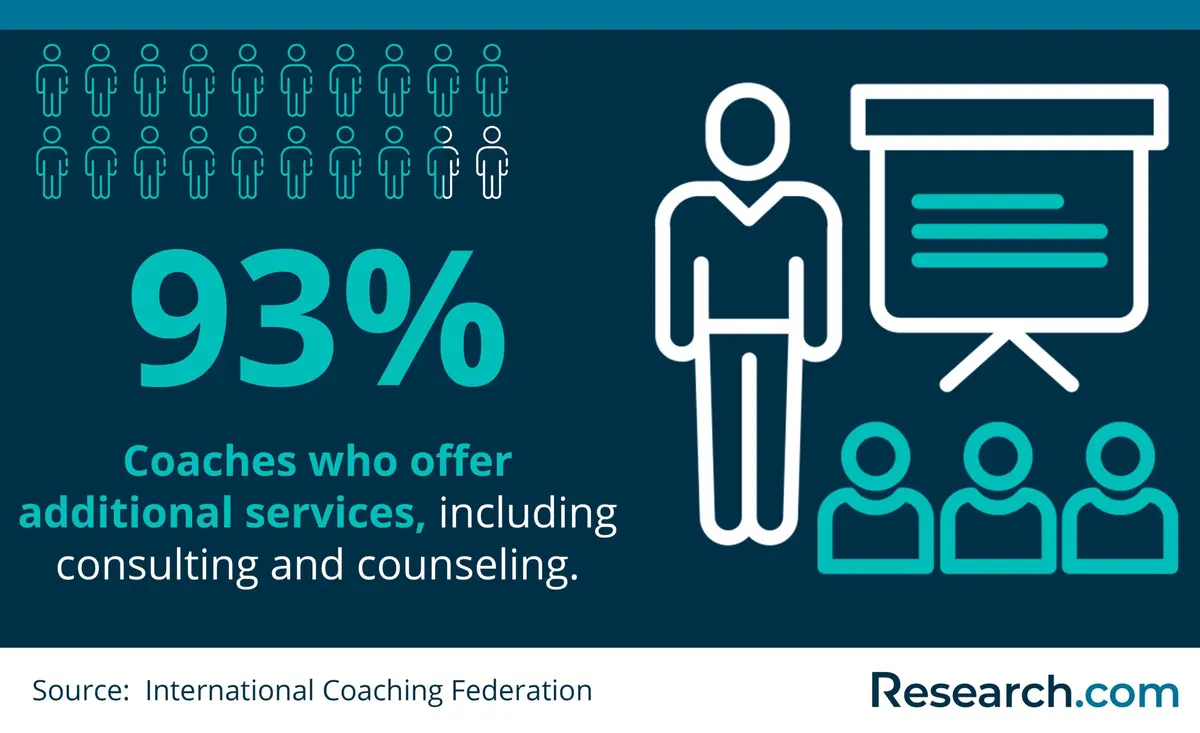
Life coaching is not one single service. Most coaches focus on a niche so clients can choose someone whose experience matches the specific change they want to make.
- Career coaches. These coaches help clients evaluate strengths, interests, professional goals, job-search strategies, career transitions, and workplace challenges.
- Health and wellness coaches. These professionals support clients who want to improve habits related to stress, exercise, sleep, nutrition, lifestyle consistency, and overall well-being.
- Relationship coaches. These coaches work on communication, conflict patterns, boundaries, dating goals, family dynamics, or relationship satisfaction, while avoiding clinical couples therapy unless properly licensed.
- Financial coaches. These coaches help clients build better money habits, create budgets, reduce debt, prepare for entrepreneurship, or think through retirement-related behaviors.
- Spiritual coaches. These coaches help clients explore meaning, values, belief systems, spiritual practices, purpose, and personal alignment.
Benefits of Life Coaching
Effective coaching gives clients a structured way to move from vague intentions to specific actions. The value usually comes from the combination of reflection, planning, honest feedback, and accountability.
- Clearer priorities. Coaching can help clients identify which goals matter most and what actions should come first.
- Greater self-awareness. Clients may better understand strengths, patterns, assumptions, and obstacles that shape their decisions.
- Improved confidence. A coach can help clients challenge limiting beliefs and build a more realistic sense of capability.
- Accountability. Regular check-ins can make it easier to follow through on commitments instead of abandoning goals after the initial motivation fades.
- Stronger communication. Coaching may support better conversations, more direct requests, healthier boundaries, and more productive conflict management.
- Stress management support. Coaches can help clients build routines and coping strategies that support resilience, while referring out when stress becomes a clinical concern.
- Improved motivation and productivity. Coaching can help clients understand what drives them, reduce avoidance, and build systems that support consistent progress.
Limitations of Life Coaching
Life coaching can be useful, but it has clear boundaries. Clients and aspiring coaches should understand those limits before committing time or money.
Change takes time
A coach cannot guarantee rapid transformation. Meaningful progress usually requires consistent effort, realistic goals, reflection between sessions, and repeated behavior change.
Coach-client fit matters
A coach’s style, niche, communication approach, and values may work well for one client and poorly for another. Compatibility is a major factor in whether coaching feels useful.
Coaches do not treat serious mental health conditions
Life coaches should not diagnose conditions, prescribe medication, provide psychotherapy, or manage clinical symptoms. Clients who need mental health care should work with a licensed professional.
Coaching should be treated as professional work
The coaching market can attract people who see it mainly as a quick income opportunity. That is risky. Poor guidance can affect a client’s career, finances, relationships, and well-being. Ethical coaches invest in training, know their limits, document their services, and refer clients when needed.
| Common mistake | Why it is risky | Better approach |
| Assuming any coach is qualified | The field is not uniformly licensed, so credentials vary widely | Review training, certification, experience, references, and scope of practice |
| Using coaching instead of therapy | Clinical issues may worsen without appropriate care | Choose a therapist when symptoms, trauma, addiction, or safety concerns are present |
| Expecting guaranteed results | Coaching depends on client effort, fit, and realistic goals | Ask how progress is measured and what responsibilities each party has |
| Choosing only by price or popularity | A large following does not prove competence | Evaluate methods, ethics, specialization, and client outcomes carefully |
Receptions of Life Coaching
Life coaching has supporters and critics. Supporters value its practical structure, flexibility, and focus on personal agency. Critics point to the lack of consistent regulation, the ease with which someone can market coaching services, and the risk of unqualified individuals working with vulnerable clients.
The field is also associated with the broader self-help movement. Self-help books, videos, seminars, and programs became especially visible from the 1990s to the 2000s, and many people found them useful. At the same time, the self-help space has long been vulnerable to exaggerated promises, weak evidence, and people selling hope without adequate expertise.
The practical conclusion is not that all life coaching is unreliable. It is that clients need to vet coaches carefully, and coaches need to practice with humility, training, and clear boundaries.
What People Look for in a Life Coach
Because life coaching is not regulated like therapy, clients should evaluate coaches before signing a contract. A good coach should be able to explain what they do, what they do not do, how sessions work, how confidentiality is handled, and what training supports their practice.
Qualifications
Some clients prefer coaches with college-level education, while others focus more on coaching-specific training and demonstrated experience. Undergraduate study may be enough for some niches; advanced academic work, including a short or accelerated doctoral program, may be relevant for coaches who want deeper expertise in a related field. In coaching-specific training, programs accredited by the ICF and the National Board for Health & Wellness Coaching (NBHWC) are often treated as strong markers of quality.
Specialization and experience
Clients often look for a coach who has experience with the exact issue they want to address. A career transition client, for example, may prefer a coach with hiring, workforce, or leadership experience, while a wellness client may want someone trained in behavior change and health coaching.
Communication skill
A strong coach asks thoughtful questions, listens closely, summarizes patterns, challenges assumptions respectfully, and turns discussion into practical next steps.
Support and empathy
Clients usually want to feel understood without being judged. The best coaching relationships balance encouragement with honest feedback.
Confidentiality
Clients should know how their information will be protected before sessions begin. Coaches should use clear confidentiality agreements and explain any legal or safety-related exceptions.
| Question to ask a potential coach | What the answer should clarify |
| What training or certification do you have? | Whether the coach has completed credible preparation |
| What type of clients do you usually work with? | Whether the coach’s experience matches your goals |
| How do you measure progress? | Whether sessions are structured and outcome-focused |
| What is outside your scope of practice? | Whether the coach understands ethical boundaries |
| How do you handle confidentiality? | Whether your privacy expectations are clearly documented |
| What happens if coaching is not the right fit? | Whether the coach has a referral or exit process |
How can clients maximize their experience with a life coach?
Coaching works best when clients take an active role. A coach can provide structure and accountability, but the client must bring honesty, preparation, and follow-through.
- Define specific goals before starting. Clear, measurable goals make sessions more productive and help both client and coach track progress.
- Be direct about concerns and obstacles. Coaching is less useful when clients hide doubts, fears, or stalled progress.
- Follow through between sessions. The real work often happens outside the meeting, through practice, reflection, and action steps.
- Review progress regularly. Clients should revisit past commitments and identify what worked, what did not, and what needs to change.
- Stay open to feedback. Useful coaching may feel challenging at times because it asks clients to notice patterns they may prefer to avoid.
Clients get the most value when they treat coaching as an active process rather than a passive conversation.
Becoming a Life Coach
Becoming a life coach can involve education, coaching-specific training, certification, business setup, and ongoing professional development. Depending on the training route and specialty, the process can cost between $200 and $13,500 (Simply.Coach, 2025). New coaches may also need to budget for technology, insurance, marketing, office space, scheduling tools, and client management systems.
The right path depends on the type of clients you want to serve, but most aspiring coaches should move through the following steps.
Pick a niche
Choose a specialty that fits your background, interests, and credibility. A fitness-oriented professional may move toward wellness coaching, while someone with experience in budgeting or entrepreneurship may be better positioned for financial coaching.
Obtain education
Some coaching niches may not require a college degree, while others benefit from formal study. If you are comparing academic routes, you may start by asking, “What is a bachelor degree that supports my coaching goals?” Universities may also offer life coaching certificates that can serve as a foundation for later training or graduate-level study.
Related fields such as psychology, education, business, counseling, communication, and human development can help future coaches understand behavior, motivation, learning, leadership, and ethical practice.
Get trained
Coaching-specific training teaches methods that general life experience does not. Strong programs typically cover active listening, questioning, goal-setting, accountability structures, ethics, client boundaries, and practice sessions with feedback.
Get certified
Certification is not the same as licensure, but it can help establish credibility. The ICF offers credentials based on training, coaching hours, client experience, and assessment. Depending on the route, programs may include 60 to 100 training hours or more.
Continue your education
Many coaching organizations require credential renewal every three years. Continuing education may include workshops, supervision or mentor coaching, advanced certifications, or graduate study. Some coaches expand their business and leadership training through a low cost online MBA, while others explore psychology-focused options such as the cheapest online PsyD programs.
How to Become an Accredited Life Coach
Accreditation matters because it gives clients a way to distinguish structured training from informal advice-giving. While life coaching requirements vary by specialty and provider, completing training through a reputable organization can show that you have studied coaching ethics, client boundaries, core skills, and professional standards.
If you want an academic route, you can also compare accredited non profit online colleges for programs that align with your niche, such as psychology, education, leadership, health promotion, or business.
What Are the Advanced Educational Options for Life Coaches?
Experienced coaches may pursue advanced education when they want to move into executive coaching, leadership development, organizational consulting, wellness leadership, or a more specialized practice. For example, executive masters degrees may be useful for coaches who work with managers, founders, or senior professionals because these programs often emphasize leadership, strategy, and organizational decision-making.
Advanced education is not required for every coach, but it can strengthen credibility when the degree closely matches the coach’s niche and client base.
Are There Emerging Trends in Life Coaching?
Technology is changing how coaching is delivered. Many coaches now use video sessions, digital intake forms, goal-tracking tools, client portals, and data-informed progress reviews. These tools can make coaching more accessible, but they also require stronger attention to privacy, documentation, and ethical communication.
Another trend is interdisciplinary practice. Some coaches are adding training from adjacent fields to better understand behavior change. For example, professionals interested in structured behavioral methods may explore options such as BCBA certification online. Coaches should be careful, however, not to imply clinical or behavioral authority beyond the credentials they actually hold.
Should Life Coaches Consider Counseling Credentials?
Some coaches eventually realize that many client concerns are emotionally complex and may exceed the boundaries of coaching. In those cases, counseling education may be worth considering, especially for professionals who want to provide clinical services legally and ethically. Reviewing the steps to become a licensed therapist can help coaches understand the education, supervised experience, exams, and licensure requirements involved.
Coaches should not present themselves as therapists unless they have met the applicable licensing requirements. Additional education can expand a career, but it also comes with a higher legal and ethical responsibility.
Can Life Coaching Expand into Advanced Counseling Credentials?
Life coaches who want to work clinically may pursue counseling or therapy credentials instead of trying to stretch coaching beyond its proper scope. Marriage and family therapy, counseling, social work, and psychology pathways each have different requirements and professional boundaries.
For coaches interested in family systems, relationships, and clinical practice, accelerated online MFT programs may be one route to research. The key is to understand that earning a therapy credential changes the professional role: clinical practice requires supervised training, licensure, documentation, and compliance with state regulations.
Certification and Training Pathways for Life Coaches
Professional coaching requires more than being a good listener or giving advice. Credible coaches need training in communication, ethics, goal design, client boundaries, and practice management.
1. Choose a Life Coaching Specialty
Start by deciding which client problem you are prepared to help solve. Common specialties include career coaching, wellness coaching, executive coaching, relationship coaching, financial coaching, spiritual coaching, and life transition coaching. A clear niche makes training choices easier and helps clients understand why they should hire you.
2. Understand the Key Certifications
Life coaching is not a licensed profession, but certification from a recognized organization can improve credibility. The International Coaching Federation is one of the best-known bodies in the field and offers several credential levels:
- Associate Certified Coach (ACC): A common entry-level credential that requires 60 hours of training and at least 100 hours of coaching experience.
- Professional Certified Coach (PCC): A credential for more experienced coaches that requires 125 hours of training and 500 hours of client coaching experience.
- Master Certified Coach (MCC): The most advanced ICF credential listed here, requiring 200 hours of training and 2,500 hours of client coaching experience.
Other organizations, including the Center for Credentialing & Education (CCE) and the International Association of Coaching (IAC), also offer credentialing options. Compare requirements carefully because programs differ in coursework, supervised practice, assessment, and renewal standards.
3. Enroll in a Life Coach Training Program
Training programs are available online and in person, and they may last from a few weeks to several months. Look for programs that include live practice, feedback, ethics, coaching demonstrations, and clear assessment criteria rather than only recorded lectures.
People who prefer a broader academic background may also consider education-related degrees. Programs listed among the best online colleges for teaching degrees can be relevant for future coaches interested in adult learning, mentoring, communication, and instructional design.
4. Consider Continuing Education and Specialization
Certification is not the end of development. Coaches need continuing education to keep skills current, maintain credentials, and respond to changing client needs. Specialized training may be useful in executive coaching, health and wellness, financial behavior, spiritual development, or career transition coaching.
5. Cost of Life Coach Certification
Training costs vary by provider, depth, and credential level. Basic training courses can start around $1,500, while more advanced or comprehensive programs can cost $5,000 or more. Cost alone should not drive the decision. Review accreditation, mentor support, practice hours, refund policies, graduate outcomes, and whether the program aligns with your target niche.
| Training factor | Why it matters | What to check |
| Accreditation or recognition | Signals that the program follows external standards | Whether the program is connected to a recognized coaching body |
| Practice and feedback | Coaching skill improves through observed practice | Live sessions, mentor coaching, peer coaching, and evaluations |
| Ethics training | Protects clients and coaches | Confidentiality, referrals, boundaries, and scope of practice |
| Specialty fit | General training may not prepare you for every niche | Whether coursework supports your intended client population |
| Total cost | Tuition is only part of the investment | Fees, materials, supervision, credential exams, renewals, and business costs |
What Legal Considerations Should Life Coaches Be Aware Of?
Life coaches should use written agreements that define services, fees, cancellation rules, confidentiality practices, boundaries, and limitations. Contracts should clearly state that coaching is not therapy, medical care, legal advice, or financial advising unless the coach separately holds those qualifications.
Coaches should also consider liability insurance, secure recordkeeping, informed consent forms, privacy practices, and referral procedures. Laws vary by location, so coaches should consult legal professionals when building contracts and policies. Coaches who frequently encounter addiction-related issues may also research formal education options such as cheap online substance abuse counseling programs, while remembering that counseling roles require proper credentials.
Can Counseling Credentials Enhance Life Coaching Practice?
Counseling education can help a coach better understand human behavior, emotional distress, and referral needs. However, it should not blur the line between coaching and clinical care. A coach with counseling training must still follow the laws and scope of the credential they hold.
Professionals comparing counseling pathways may find it useful to understand the difference between an LPC license vs LCSW. These credentials prepare professionals for different types of clinical and social service work, and they are not interchangeable with coaching certification.
Does Life Coaching Work?
The better question is not simply whether life coaching works, but when, for whom, and under what conditions. Coaching is most likely to be useful when the client has a clear goal, the coach is qualified for the issue, both parties agree on measurable progress, and the client follows through between sessions.
Coaching may help people clarify career direction, improve productivity, strengthen communication, make better decisions, or build healthier routines. It may also support those who are trying to choose the right careers to explore. It is less appropriate when a client needs mental health treatment, crisis intervention, or clinical support.
If you want to become a life coach, treat the work seriously. Clients may make decisions about jobs, money, relationships, and identity based partly on your guidance. Competence, honesty, and ethical boundaries matter.
Ethical Considerations in Life Coaching
Ethics are central to trustworthy coaching. Because clients may share personal struggles and make important life decisions, coaches must protect client welfare and avoid overclaiming their expertise.
Boundaries Between Coaching and Therapy
Coaches must not diagnose, treat, or manage mental health conditions unless they are separately licensed to do so. Ethical practice includes recognizing warning signs and referring clients to qualified therapists when a concern falls outside coaching.
Confidentiality
Clients should know what information is private, how records are stored, and what exceptions may apply. Confidentiality expectations should be explained in writing before coaching begins.
Avoiding Conflicts of Interest
Coaches should not let commissions, personal relationships, or outside business interests shape their recommendations. If a coach benefits from a referral, the client should know that clearly.
Informed Consent
Clients should understand the coach’s qualifications, methods, fees, limitations, and realistic expectations before agreeing to services.
Ongoing Professional Development
Ethical coaches keep learning. Continuing education helps coaches refine skills, respond to new tools and trends, and stay aligned with professional standards.
Coaches who want a broader academic foundation may consider a dual degree that combines complementary disciplines, but they should choose programs based on career goals rather than assuming more credentials automatically create a better practice.
Is Life Coaching a Sustainable Career Option?
Life coaching can become a sustainable career, but it is not automatic. Coaches must build credibility, define a niche, attract clients, manage business operations, continue training, and deliver measurable value. The field’s low barrier to entry also means competition can be high.
Some coaches strengthen their practice with advanced credentials, specialized certificates, or related graduate education. For those who want deeper counseling knowledge, a cheap online master's in counseling may be worth researching, but it should be evaluated carefully for accreditation, licensure alignment, cost, and career fit.
How Can Life Coaches Optimize Their Professional Growth?
Long-term growth requires more than adding services. Successful coaches usually improve in three areas: professional skill, business strategy, and client outcomes. That may include advanced training, networking, referral partnerships, client feedback systems, digital marketing, clear packages, and better documentation.
Coaches who want to diversify income may offer workshops, group coaching, corporate training, digital products, or specialized consulting. Professionals interested in premium service models may also study related career strategies, such as how to make six figures as a therapist, while adapting only the lessons that ethically fit a coaching practice.
Key Insights
- Life coaching is goal-focused, not clinical. It helps clients clarify goals, build plans, and stay accountable, but it does not replace therapy or mental health treatment.
- The field is growing but unevenly regulated. Coaching has been described as a $5.34 billion global industry as of 2025, yet clients still need to vet coaches carefully because qualifications vary.
- Therapy and coaching serve different needs. Therapy is appropriate for trauma, diagnosis, symptoms, crisis, and clinical care; coaching is better suited to future-oriented personal and professional goals.
- Specialization matters. Career, wellness, relationship, financial, spiritual, and executive coaches serve different client needs, so both clients and aspiring coaches should choose a niche carefully.
- Credibility depends on training and ethics. Strong coaches invest in reputable training, understand scope of practice, use written agreements, maintain confidentiality, and refer clients when needed.
- Certification can improve trust, but it is not licensure. ICF credentials such as ACC, PCC, and MCC can support professional credibility, but they do not authorize clinical practice.
- A sustainable coaching career requires business discipline. Coaches need a clear niche, strong client outcomes, ongoing education, legal safeguards, and realistic expectations about competition and income.
References:
- North Dakota State University. (2025). Counselor Education Program/Student Outcomes Report. https://www.ndsu.edu/ceduc/about_us/program-quality/counselor-ed-outcomes
- Texas State University. (2025). CACREP Student Outcome Data Summary. https://docs.gato.txst.edu/769109/CACREP%20Student%20Outcome%20Data%20Summary%20AY%202024-2025.pdf
- U.S. Bureau of Labor Statistics. (2025). Employment Projections: 2024-2034 Summary. https://www.bls.gov/emp/
- U.S. Bureau of Labor Statistics. (2025). Occupational Projections and Worker Characteristics. https://www.bls.gov/emp/tables/occupational-projections-and-characteristics.htm
- U.S. Bureau of Labor Statistics. (2025). Occupational Outlook Handbook: Marriage and Family Therapists. https://www.bls.gov/ooh/community-and-social-service/marriage-and-family-therapists.htmOccupational projections table
Other Things You Should Know About Life Coaching
Life coaching offers numerous benefits, including increased self-awareness, clearer goal-setting, improved personal and professional relationships, and enhanced communication skills. Clients often report higher levels of motivation and confidence, contributing to overall life satisfaction and personal development.
To enroll in a life coaching program in 2027, you typically need a high school diploma or equivalent. Some programs may require prior work experience or additional qualifications, depending on the specialization. Checking specific program prerequisites is advisable before applying.
Life coaching is not universally regulated, and certification requirements vary by location and organization. In 2027, aspiring life coaches should research local regulations and consider earning credentials from reputable organizations to enhance credibility and skills.
Life coaching is not regulated by a governing body or licensing agency, which means anyone can market themselves as a life coach. Therefore, it is essential for clients to verify the credentials and experience of a potential coach.
In 2027, life coaching types include executive, wellness, career, and relationship coaching. Each type focuses on specific goals; for instance, executive coaching targets leadership skills, while wellness coaching emphasizes physical and mental well-being. Choosing the right type depends on individual needs.
In 2027, life coaching has evolved to include specialists in digital well-being, eco-coaching, and virtual reality integration. Digital well-being coaches focus on managing technology use for better mental health. Eco-coaches emphasize environmental consciousness in personal development, while virtual reality coaches use immersive technology for experiential growth.